When your AI job crashes, it should not start over
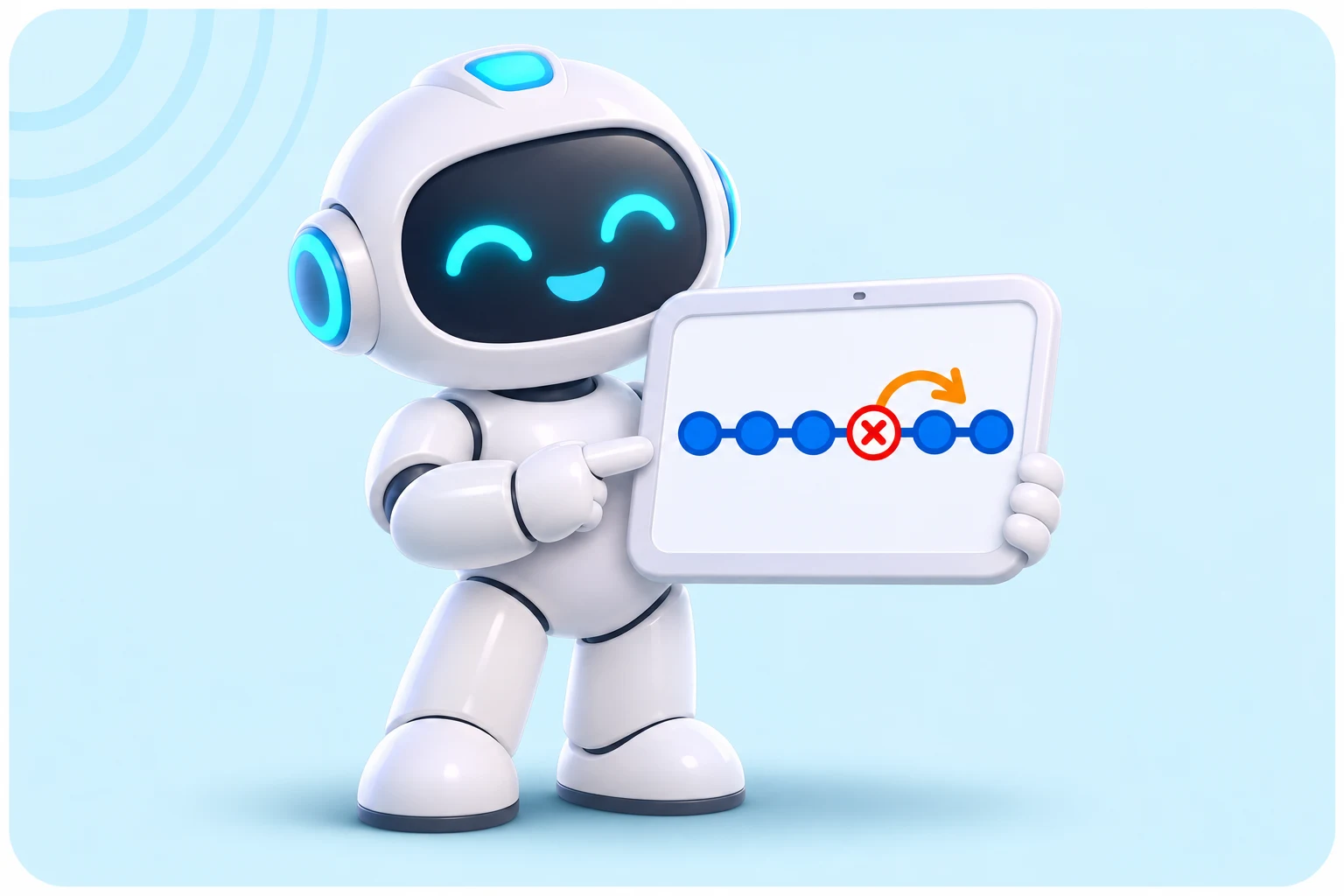
Durable execution means a long-running job survives the process that runs it. If the machine dies at step seven of twelve, the work resumes at step seven rather than restarting from the beginning. Temporal is the engine that does this. We build AI agents and data pipelines on top of it.



Crawlify powers ScholarMeet’s data pipeline, continuously aggregating verified conference data from hundreds of academic websites.




The failure this fixes
An agent runs for forty minutes, calls six tools, and dies on the seventh. The next run starts from nothing. It calls the same six tools again, pays for the same six model calls again, and dies in the same place.
Or it succeeds at the step that charges a customer, fails at the step that records the charge, and now your database and your payment processor disagree.
Both problems have the same root: the system has no memory of what it already finished. Retries do not fix it. A queue does not fix it.

What durable execution actually does
The engine records every step as it completes, outside the process doing the work. That one change is what makes the three things below possible.

It picks up where it left off
If it crashes, it resumes at the step that failed, not from zero. Completed work stays completed.

It waits without burning money
A job can pause for a human approval or a slow API for hours or days without holding a process open or costing anything while it waits.

Risky actions wait for a yes
Anything irreversible stops and waits for a person to approve it. The workflow survives the wait.
Our proof
We built it on Temporal, then broke it on purpose
Crawlify, the data-extraction product we build and run ourselves, runs on Temporal. To find out whether durable execution holds up under a real failure, we killed workers mid-run across 62 child workflows, with no clean shutdown and no warning. Sixty resumed on their own, from the step they were killed at, with no human touching anything.
The cost figure is the part that surprises people. When a job fails partway, only the broken steps re-run: fourteen of forty-one nodes, for less than half a cent. Without that, the whole job runs again at full price.

60 of 62
child workflows recovered on their own after we forced them to fail

$0.0041
to re-run 14 of 41 nodes in a targeted repair, instead of the whole job

1,600+
eval tests running against gold datasets of 4,444 and 17,229 records
The two that didn't
Two of the 62 workflows did not resume on their own. We haven't published a cause for those two yet, because we only publish one once it's verified and specific. So the result is reported exactly as measured: 60 of 62.
Do you actually need this?
Often you do not. Adding a workflow engine buys you complexity you will have to maintain, so it has to earn its place.
A retry and a queue are enough when
- Your jobs finish in under a minute
- Repeating a step is cheap and has no side effects
- A failure halfway through leaves nothing out of sync
- Nothing has to stop and wait for a person
Durable execution earns its cost when
- Jobs run long enough to be interrupted partway
- Steps cost real money to repeat, or can't be undone
- A partial failure leaves two systems disagreeing
- A workflow has to pause for a human and survive the wait
If none of those describe you, we will tell you so on the call.
What we do
For teams already evaluating Temporal, and for teams who need what it does. If you'd rather we keep running it after launch, that's what our AgentOps Retainer is for.

New builds
AI agents, agentic workflows, and data pipelines designed on Temporal from the first line, rather than retrofitted after the first outage.

Migration
Moving an existing agent or job runner onto Temporal one workflow at a time, with the old path still running until the new one is proven.

Architecture review
Reading your existing Temporal implementation and finding the workflows that will not survive a worker restart.

Team handover
Your engineers own it when we are done. We write the runbooks and work alongside your team, not in place of them.
Why Temporal specifically
Temporal describes the approach as writing code for the happy path only, and letting the engine handle everything that goes wrong. Temporal names Snap, Netflix, Cloudflare, OpenAI, Coinbase, and DoorDash among the companies using it, and reports 99.999% uptime over a trailing 30 days. (All of these are Temporal's own published figures.)
We use it because it is the mature option for long-running AI work, and because the failure modes it handles are the ones we are hired to fix.

Frequently asked questions
Durable execution is a way of running long workflows so that they survive the machines running them. The engine records every completed step. If the process crashes, is redeployed, or loses its network, the workflow resumes at the step that failed rather than restarting from the beginning. Completed work stays completed, and steps that cost money are not paid for twice. It matters most for jobs that run for minutes or hours, that call external services which sometimes fail, or that need to pause and wait for a human decision before continuing. In our kill drill, 60 of 62 workflows resumed this way on their own.
Most agents are written as a single program that holds its state in memory. The list of what it has already done exists only inside that running process. When the process dies, so does the record. The next run has no way to know that six of the seven tool calls already succeeded, so it makes all of them again, pays for all of them again, and often fails in the same place. The fix is to move that record out of process memory and into something that outlives the process, which is what a durable execution engine does.
For short jobs, retries and a queue are usually enough, and adding a workflow engine costs you complexity for no benefit. Temporal earns its place when a job runs long enough to be interrupted partway, when repeating a step costs real money or has side effects you cannot undo, when a partial failure leaves two systems holding different versions of the truth, or when a workflow has to wait for a person to approve something and survive that wait. If none of those apply to your system, we will say so. Our Temporal vs Airflow vs LangGraph comparison covers how it differs from the other common choices.
Yes, and this is one of the strongest reasons to use it for agents. A workflow can pause at any point to wait for a human decision and stay paused for hours or days without holding a process open or costing anything while it waits. When the approval arrives (the human-in-the-loop pattern) the workflow continues from exactly where it stopped. We use this for anything irreversible: sending money, writing to a customer record, contacting a customer. The agent proposes the action and a person approves it, and the workflow survives however long that takes.
A single well-understood workflow usually takes two to four weeks, including the tests that prove it behaves the same as the old one. We do not migrate everything at once. We move one workflow, run it alongside the existing path until the results match, then cut over and move the next. That keeps the old system working throughout and means a migration can stop at any point without leaving you half-moved. A full migration of a system with several interacting workflows more often runs eight to twelve weeks.
Let’s make it survive its worst day.
Tell us what your system does and where it breaks. We’ll tell you honestly whether durable execution is the fix, or whether a retry and a queue will do.
Tell us where your jobs are dying
Describe what the system does, how long its jobs run, and what happens when one fails partway. We'll scope it in a working session, with no commitment beyond that conversation.