
Introduction
Generative AI has already changed how we create text and images but the next frontier is even more powerful. Welcome to the age of multimodal generative AI: systems that can understand and generate multiple types of data text, images, audio, video, and more all at once.
This isn’t just an upgrade in capability, it’s a leap toward building smarter, more human-like software experiences. From virtual assistants to creative tools and enterprise platforms, multimodal AI is redefining how users interact with technology.
In this blog, we explore what multimodal generative AI means for software products, how it’s being used, and why it’s shaping the future of digital innovation.
1. What Is Multimodal Generative AI?
Traditional AI models work with a single type of data like text-only or image-only generation. Multimodal AI, on the other hand, can process and generate across multiple data types simultaneously.
For example:
- An AI assistant that reads a document, summarizes it, and generates a slide deck with relevant visuals.
- A creative tool that turns a voice prompt into a storyboard with narration.
- A healthcare app that interprets patient data, reads medical images, and drafts a report.
These capabilities stem from large-scale models trained on diverse inputs often called “foundation models” like OpenAI’s GPT-4, Google’s Gemini, or Meta’s LLaVA.
2. Smarter Product Interfaces and User Experiences
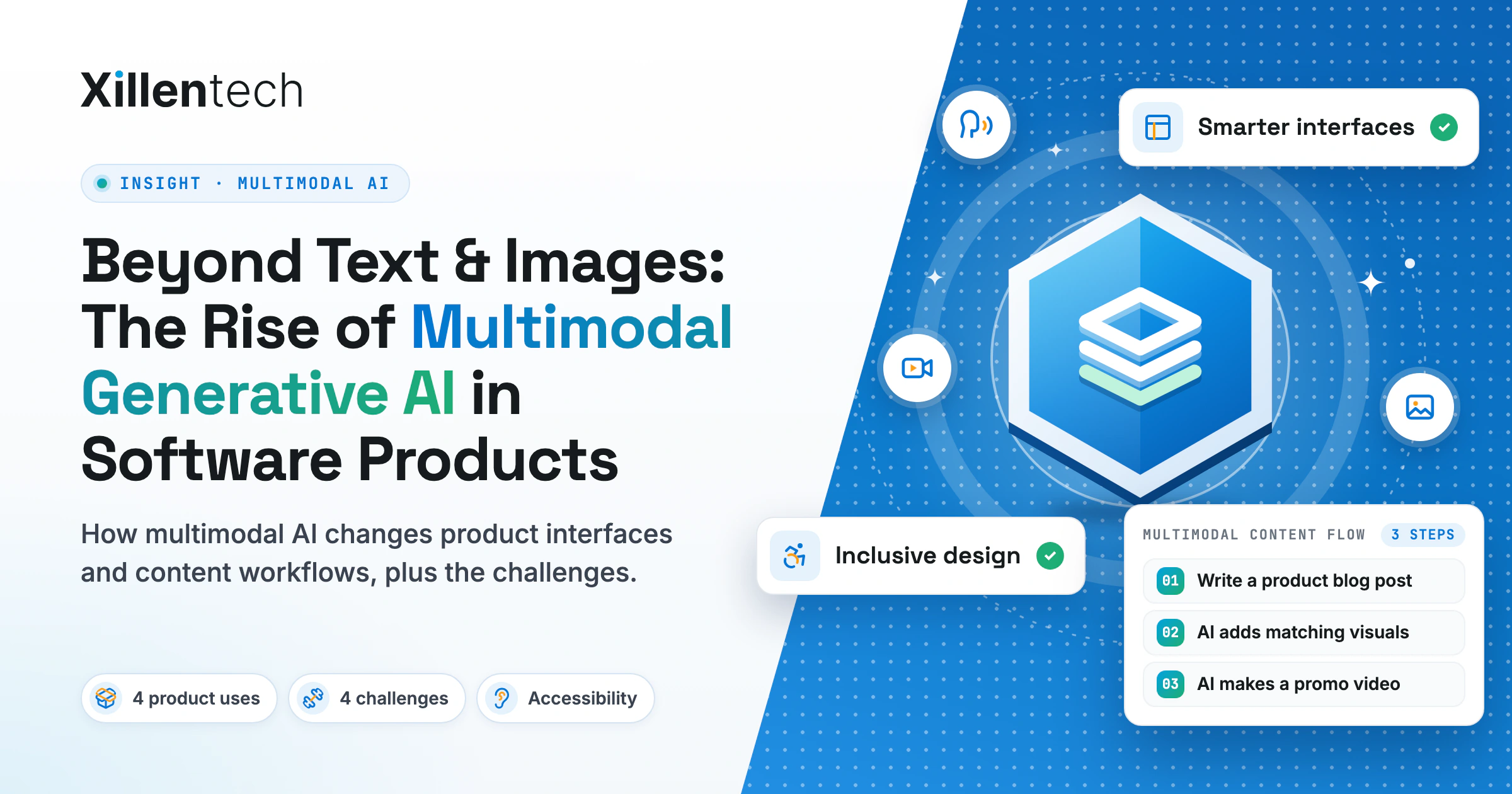
Multimodal AI enables interfaces that feel more natural and intuitive. Users can interact with software through text, speech, images, or even gestures breaking traditional input boundaries.
Real-world applications include:
- Virtual assistants that accept voice, interpret a screenshot, and answer with spoken instructions.
- Design apps where users describe a concept verbally, and the app generates layouts with both text and images.
- Education platforms that generate video lessons from written material, complete with visuals and voiceovers.
This allows for more flexible, accessible, and intelligent user experiences especially on mobile and voice-first platforms.
3. Revolutionizing Content Creation Workflows
Creators, marketers, and product teams are using multimodal AI to automate entire content workflows, not just single tasks.
For instance:
- Write a product blog → AI generates matching visuals → AI creates a short promotional video → Auto-publish with captions.
- Input a podcast transcript → AI creates social media snippets, quote graphics, and a newsletter summary.
By combining modalities, AI helps produce cohesive content packages faster and at scale.
4. Real-Time Decision Support and Automation
Multimodal AI is also powering intelligent decision-making tools in enterprise software. These tools process multiple data streams simultaneously with text reports, visual dashboards, voice input and generate insights or recommended actions.
Examples include:
- Retail analytics platforms that combine customer reviews (text), security footage (video), and POS data to detect patterns or anomalies.
- Medical tools that analyze patient symptoms (text), X-rays (images), and speech recordings to assist in diagnostics.
- Logistics systems that assess real-time traffic feeds, weather maps, and driver updates to optimize routes on the fly.
This leads to smarter automation, quicker decisions, and fewer silos between data sources.
5. Accessibility and Inclusive Design
Multimodal AI helps make software more inclusive. Users with different abilities can interact in the way that suits them best:
- Voice for those with motor impairments
- Visual cues for hearing-impaired users
- Text summaries for video/audio content
- Image-to-text descriptions for visually impaired users
This not only improves accessibility but broadens your product’s reach.
6. Challenges to Consider
While the potential is huge, building with multimodal AI comes with challenges:
- Performance: Real-time multimodal processing requires significant computing power.
- Training data: Getting diverse, high-quality multimodal datasets is complex.
- Ethical risks: Combining modalities can amplify bias or misinformation if not carefully managed.
- UI/UX design: Interfaces must be thoughtfully designed to support multiple input/output types.
Addressing these challenges early in the product design process is key to successful integration.
Final Thoughts
The rise of multimodal generative AI marks a turning point in how software is designed, built, and used. It moves us beyond single-purpose automation into more human-centered, dynamic, and creative digital experiences.
As tools get smarter, the line between user and machine blurs and the software becomes more of a collaborator than just a tool.
The future of software isn’t limited to text or images; it’s about all inputs, all outputs, all at once.
How Xillentech Can Help
At Xillentech, we help product teams use the latest in AI text, image, audio, and video to build smarter, more versatile software products. Whether you’re enhancing an existing platform or building a new AI-first solution, we bring the technical expertise and creative thinking to help you lead in the multimodal era.
We offer:
- Multimodal AI strategy and system design
- Integration of GPT, diffusion models, and speech tools
- Custom product development with multi-input interfaces
- Enterprise-grade AI infrastructure and scalability
- Ethical, inclusive AI practices from day one
Ready to explore what multimodal AI can do for your product?
Visit Xillentech and let’s build the future together.